Commercial door security: what every business owner should know
Every commercial property has doors that see constant use. Employees come and go, deliveries arrive, customers enter and leave, and all of that traffic puts stress on locks, hinges, and access hardware. A door that does not close properly, a lock that sticks, or a key system that cannot be managed easily are not just annoyances. They can create real security gaps that a business owner may not notice until something goes wrong.
Commercial doors differ from residential ones in several ways. They are built to handle heavier use, and they often must meet building codes for emergency exit. A deadbolt on a house door is simple. A panic bar on a storefront door, on the other hand, must allow quick exit while keeping the building secure from the outside. Understanding how these systems work helps a business owner choose the right hardware and know when to call a professional for service.
The difference between residential and commercial locks
A residential lock is designed for a low number of cycles per day. A front door at home might be locked and unlocked a dozen times in a day. A commercial door at a busy restaurant or retail store may see that many cycles in an hour. The internal parts of a commercial lock are made from harder materials and are built to withstand that wear. The locking mechanism itself is often stronger, making it harder to force open.
Another difference is key control. Residential locks can usually be keyed alike if you buy them from the same manufacturer, but there is little to stop a former employee from having copies made. Commercial locks often use restricted key systems. With a restricted key, the blank is patented, so only an authorised dealer can cut a duplicate. That gives a business owner much tighter control over who holds keys to the building.
Panic bars and egress hardware
Building codes in most areas require that any door used as an exit be openable from the inside without a key or special knowledge. That is where panic bars come in. A panic bar is a horizontal bar across the inside of a door. Pushing it retracts the latch and opens the door. This design means that even in a crowded, dark, or stressful situation, anyone can get out by simply leaning against the bar.
Panic bars come in two main types. Rim panic bars mount on the surface of the door and latch into a strike on the frame. Mortise panic bars work with a mortise lock built into the door edge. Both are reliable, but the choice depends on the door type and the existing hardware. For glass storefront doors, a panic bar may be paired with a keyed cylinder on the outside so the door can be locked after hours while still meeting egress requirements.
Door closers and why they matter
A door that does not close fully is a security problem. It can also let in drafts, pests, and noise. Door closers are hydraulic devices mounted at the top of a door that control its closing speed. They ensure the door shuts firmly and latches every time. For a busy restaurant kitchen door or a side entrance used by staff, a reliable door closer prevents the door from being left ajar.
Door closers need occasional adjustment. If the door slams shut, the closer may need its speed valve turned. If the door does not close at all, the closer may need to be replaced or the door may be binding on the frame. A simple check is to open the door partway and let go. If it swings freely and does not close, the closer is not working. If it sticks or rubs, the hinges or frame may be out of alignment.
Access control and keypads
Many commercial properties now use electronic access control instead of traditional keys. A keypad on the door allows entry with a code. That code can be changed easily, so if an employee leaves, there is no need to rekey the lock or collect keys. More advanced systems use key cards, fobs, or even smartphone apps. These systems log every entry, giving a record of who entered and when.
Access control is not just for large office buildings. A small retail shop can use a keypad for the back door so delivery drivers can enter without needing a physical key. A restaurant can use a code for the employee entrance and change it weekly. The cost of these systems has come down, and they are now practical for many small businesses. The trade-off is that they run on batteries or wired power, and a dead battery can lock someone out. Most keypads have a backup mechanical key override, but that key needs to be stored somewhere accessible to authorised people.
Storefront doors and glass security
Storefront doors are typically made of aluminium and glass. They look clean and let in light, but they have unique security needs. The lock is often a cylinder set into the door frame or into a panic bar. Because the door is mostly glass, the lock itself becomes the main security point. If the lock is weak, the door can be forced open. A grade 1 commercial lock is the most secure choice for a storefront door.
Another consideration is the glass itself. Tempered glass is standard, but laminated glass or a security film can make it much harder to break. A determined intruder might try to smash the glass to reach the inside lock. Adding a security film or upgrading to laminated glass slows them down. Some business owners also install a secondary lock, such as a floor bolt, on the inside of the door for after-hours security. That bolt must be disengaged during business hours so it does not block egress.
Master key systems
In a building with multiple doors, a master key system gives a business owner one key that opens every lock while giving employees keys that open only the doors they need. For example, a cleaning crew might have a key that opens the main entrance and the break room but not the office of the manager. This kind of system requires careful planning. The locks must be pinned to accept both the individual change key and the master key. Adding new locks to the system later requires matching the pinning, which is why it is best to have a single locksmith maintain the system.
A master key system is not something to set up without expert help. If the pinning is done wrong, a key may not work on its designated lock, or worse, a master key may not work at all. For a business with many doors, the convenience of one master key is worth the upfront investment. A qualified commercial locksmith can design the system and cut the keys so that everything works smoothly.
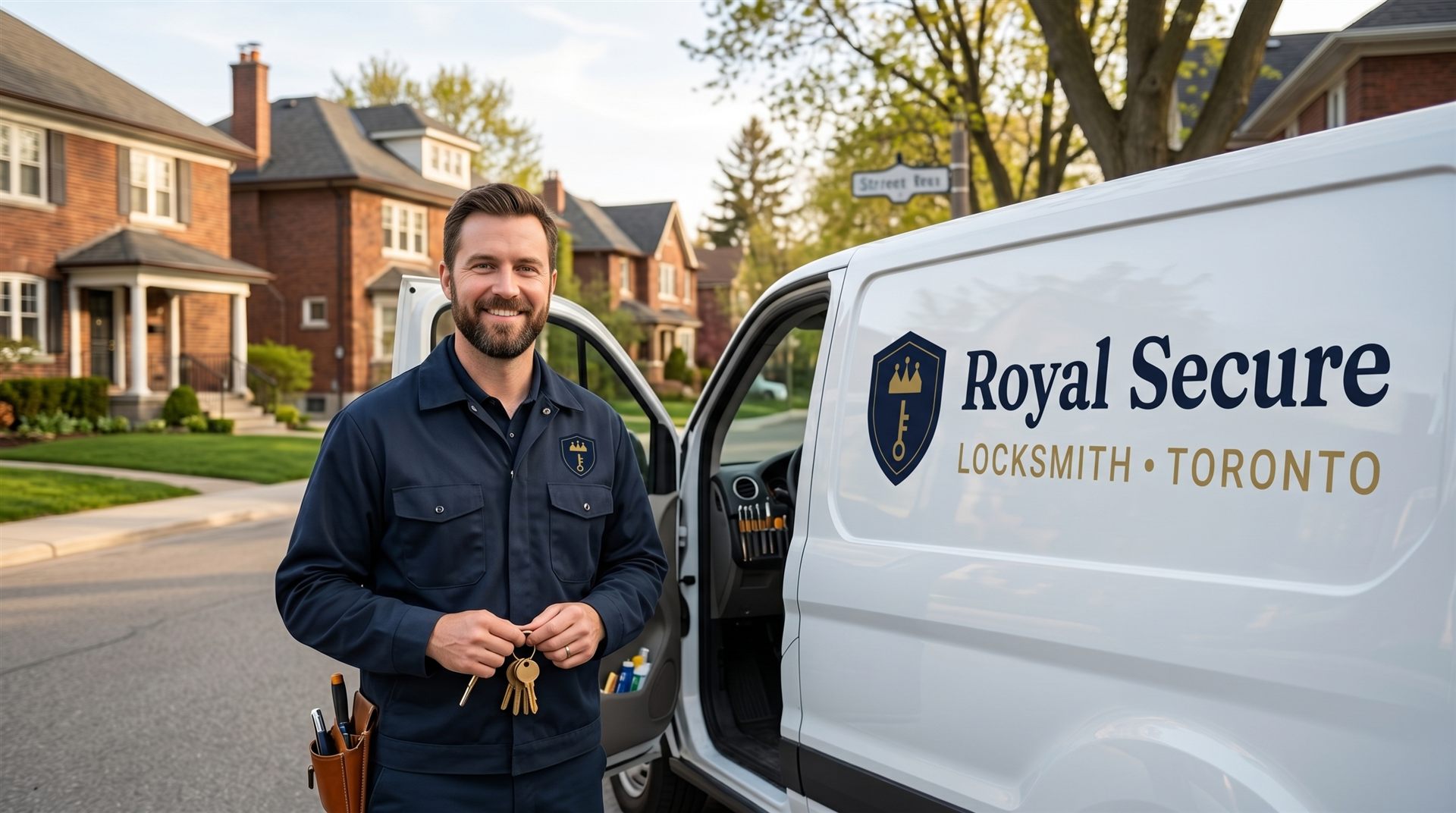
When a business owner needs help with any of these systems, a reliable service like Royal Secure Locksmith can provide the expertise. They are a mobile locksmith service that covers Toronto and the GTA, handling emergency, residential, commercial, and automotive needs. Having a contact who understands commercial hardware is useful when a panic bar breaks on a Friday night or a keypad stops working during a busy shift.
Regular maintenance and inspection
Commercial doors and locks get heavy use. A simple annual inspection can catch problems before they become emergencies. A locksmith can check that hinges are tight, that the strike plate is aligned, that the door closer is adjusted, and that the lock cylinder turns smoothly. They can also lubricate the mechanism with the right product. Many people use WD-40, but that is a solvent, not a lubricant. A dry graphite or silicone spray is better for lock mechanisms.
Another thing to check is the door itself. Wooden doors can swell in humid weather, causing the lock to misalign. Metal doors can rust or get dented. A door that does not fit its frame properly puts stress on the lock and can cause it to fail early. If a door drags on the frame, the hinges may need adjusting or the door may need to be planed or shimmed. That kind of work is best left to a professional who has the tools and experience.
What to do when a commercial lock fails
A lock that sticks or a key that will not turn is often a sign of a worn mechanism. Forcing it can break the key off in the cylinder, which makes the problem worse. The first step is to stop using that lock and find an alternative entry. If no other door is available, a commercial locksmith can come to the site, open the door, and either repair or replace the lock. In an emergency, many locksmiths offer 24-hour service.
For a business, downtime is costly. Having a backup plan, such as a spare key stored off-site or a secondary lock, can keep things running while the main lock is being fixed. Some business owners keep a spare cylinder and key on hand so a locksmith can swap it quickly rather than trying to repair the old one. That is a simple way to reduce disruption.
Security for commercial doors is not just about the lock. It is about the whole system: the door, the frame, the hinges, the closer, the hardware, and the key control. Each part has to work together. A weak link anywhere can compromise the security of the entire building. By understanding how these parts work and what can go wrong, a business owner can make informed decisions about maintenance, upgrades, and when to call a professional. The cost of a good lock and regular service is small compared to the cost of a break-in or a lost key that forces a full rekey of the building.